The OverGround FreeWay · Rites of passage to mental liberation

From the Underground Railroad to the Overground Freeway

One cannot actualize physical freedom without mental liberation. Through rites of passage of introspection, genealogy and history, we break the mental chains and build a road the next generation can see.

The road my ancestors helped sustain often had to be hidden from those who would destroy it. The road I am called to help build must be made visible to the generations who need it.
Dr. Bruce Purnell, Finding My Eagle
Two roads, one freedom story

Hidden then. Visible now.

Just as the Underground Railroad once supported a passage to physical freedom, the OverGround FreeWay is a passage on the journey to mental liberation.

The Underground Railroad
The OverGround FreeWay
Hidden, because the law had made goodness dangerous
Visible, so anyone can see how to enter and whom to turn to
A passage to physical freedom
A passage to mental liberation
A technology of trust: kitchens, wagons, boats, churches, businesses and courage
Knowledge of self becomes education, and memory becomes healing
Breaking the chains on the body
Breaking the mental chains
Learning to move around systems designed to contain us
Learning to design systems of our own
An African teaching story: the eagle in the chicken yard
The tragedy is not the yard. The tragedy is having wings and never learning why they were given to you.
Dr. Bruce Purnell, Finding My Eagle

An eaglet is raised among chickens. It learns to scratch the ground and keep its eyes down, never knowing the sky. A visitor lifts it toward the sun and tells it who it is. At first it returns to the yard, because habit is powerful. The visitor tries again from higher ground, with a wider horizon, until the eagle opens what it has always carried and flies.

The story is not an insult to the yard. A yard can shelter you, feed you and teach you to survive. Its meaning is that identity changes responsibility.

The guiding metaphor

Two wings

There is no way to fly with one wing. Even if we flapped really hard, we would just tip over. Dr. Bruce's flight began with two family houses, and each gave him a wing.

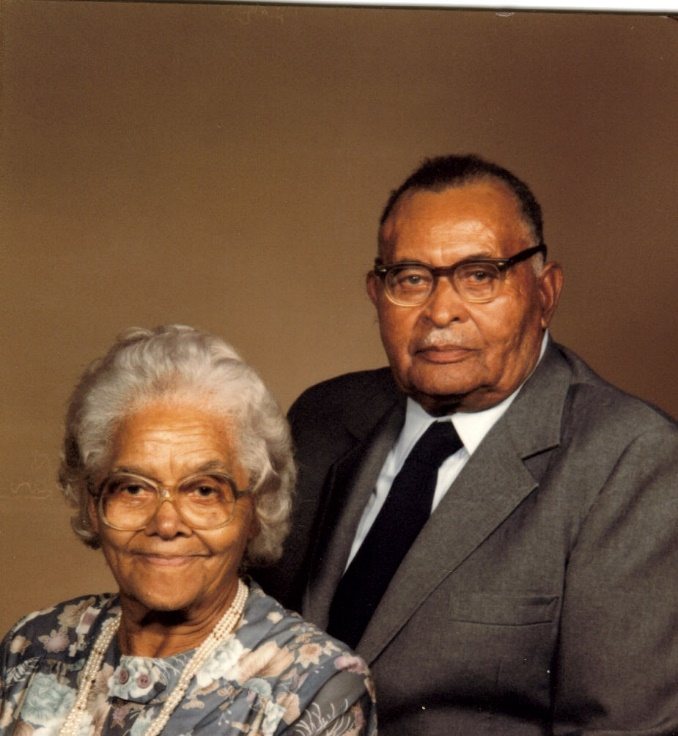
Beulah Beatrice Jacobs Barnes and Stephen Barnes
Feldon Trail · Goldsboro, North Carolina

The house that held love

  • faith
  • family
  • work
  • land
  • food
  • love

His grandparents, Stephen Barnes and Beulah Beatrice Jacobs Barnes: a small house on a dirt road, a farm, a church built by believing hands. The first place he knew unconditional love.

Nineteenth & Quincy · Washington, D.C.

The inheritance waiting for a voice

  • education
  • enterprise
  • migration
  • institution-building
  • public accomplishment

His grandfather, Lee Julian Purnell Sr., was an engineer and professor who served for twenty years as a dean at Howard University. Years later his father, Lee Julian Purnell Jr., handed him a duffle bag full of ancestry.

Love gave the search its purpose. History enlarged what love could require of a person.

Genealogy taught me to look under the road

From lantern light to daylight

Scroll down through the generations, from hidden passages to public institutions. Dr. Bruce's ancestors didn't only escape systems. They built alternatives: a lumber yard into a freedom resource, a house into a station, a newspaper into a weapon, a school into a promise, medicine into care and engineering into opportunity.

  1. 1804–1876Columbia, Pennsylvania

    William Whipper

    Freedom financed and transported

    An abolitionist, businessman and moral reformer whose lumber and coal enterprise with Stephen Smith helped support an Underground Railroad network. A lumber yard became a freedom resource.

  2. Born early 1830sPennsylvania → Canada West

    James Whipper Purnell

    Purpose carried forward

    Raised by his uncle William with the closeness of a son, he learned both commerce and its moral uses. In Canada West he worked on Martin R. Delany's African emigration project and is listed among the delegates to John Brown's 1858 Chatham Convention.

  3. 1844–1929Washington → Ontario

    Julia Ann Shadd and the Shadds

    Freedom argued, taught, healed and administered

    Julia married James Whipper Purnell, joining two freedom-making families. Her wider family included Mary Ann Shadd Cary, publisher, educator and, by Howard's account, its first Black female law student; Dr. Furman J. Shadd of Howard's medical faculty; and Marion P. Shadd, the first woman in the D.C. school system appointed assistant superintendent for elementary education.

  4. 1840s onwardChicago, Illinois

    John Jones and Mary Richardson Jones

    Home becomes civic power

    Their Chicago home is remembered as a refuge for freedom seekers. John fought Illinois's Black laws; Mary organized in her own right. Their granddaughter Theodora Lee later recalled sharing her grandmother's bed in winter and hearing her Underground Railroad stories, in a 1955 letter now preserved by the Chicago History Museum.

  5. 1869–1935Washington → California

    Dr. William Whipper Purnell and Theodora Lee

    Freedom as healing and service

    He taught at Howard's medical center, served as a military surgeon and later practiced medicine in California. Theodora was an artist, writer, teacher and civic leader.

  6. 1896–1983Berkeley · MIT · Howard

    Lee Julian Purnell

    Freedom as engineering

    Berkeley's earliest known Black electrical engineering graduate, MIT class of 1921, and for twenty years a dean at Howard. Electrical engineering is the design of systems, flow, connection and power. The Overground Freeway made almost literal.

  7. Minnesota

    Ellen Bruce and Beverly Claiborne Yancey

    Black belonging in the West

    Among the early Black residents who helped shape the community that became Edina, Minnesota.

  8. Atlanta, GeorgiaFamily memory

    The Gillespies and Herndons

    Enterprise as collective protection

    The family remembers Mary Madeline Gillespie as a favorite niece of Jessie Gillespie Herndon, who helped lead Atlanta Life after Alonzo Herndon's death.

  9. Goldsboro, North Carolina

    Stephen and Beulah Barnes

    The sacred infrastructure of home

    Not fame, but what descendants felt in their presence. The first and final measure of legacy.

  10. TodayWherever you are

    You

    The road keeps going

    The road does not end at one surname. Someone may arrive with a carefully documented lineage. Someone else may arrive with a name, a fragment, or a question that has followed them for years. Each deserves room to explore identity and possibility.

Family history is still being researched. Where a relationship rests on family memory rather than a documented record, we say so.

Howard University: where private inheritance became public capacity
Their ancestors had to learn how to move around systems designed to contain them. Their descendants learned how to design systems of their own.
Dr. Bruce Purnell, Finding My Eagle
The rites of passage

Three roads into yourself

We journey through rites of passage of introspection, genealogy and history to break the mental chains.

Rite one

Introspection

Who am I? Why am I here? What are my gifts, and what am I supposed to do with them?

Learning the difference between a perspective shaped by trauma and the fuller self underneath it.

Rite two

Genealogy

Where am I from, and how is this possible?

Names, records, photographs and family memory, held with care. Leaving a question open can protect the possibility of a better answer.

Rite three

History

What is all this history asking of me?

Knowledge of self becomes education, memory becomes healing and family history becomes a public gift.

Freedom made livable

What each word asks of us

Love, Light, Joy, Hope, Peace, Purpose, Liberation, Forgiveness and Transformation name the qualities of life we move toward. Each word asks for expression.

  1. Love

    asks how a person is received.

  2. Hope

    asks what possibilities we make available.

  3. Peace

    asks what happens when there is conflict.

  4. Purpose

    asks whether someone has room to contribute.

  5. Forgiveness

    asks how we understand accountability, release and the freedom to move forward without denying what happened.

  6. Joy

    belongs here too. Pleasure, play, rest, beauty and companionship deserve places in the future we are building.

On-ramps

Help should be recognizable

An invitation should come with a place, a relationship and a next step. Here is where the freeway opens.

For a young person

A place to bring the question of who you are

Youth and family pathways across the Love More Movement.

Explore programs
For a family

People willing to listen and work alongside you

Healing Stations, our Home B.A.S.E.s, in the community, on the LoveMobile and online.

Healing Stations
For an elder

A place for the wisdom of a lifetime to go

Seniors Offering Unconditional Love.

S.O.U.L.
For a guide

Learn to accompany others with skill and care

Become a Transformative Life Coach and Healing Leader.

T.Li.C.H.L.
The speed limit

Rest belongs on this road

The freeway image helps us imagine connection, but it does not set the speed of anyone's life. Rest belongs on this road. So does the freedom to reconsider a direction.

Survival deserves respect. There is no shame in the ways people have worked to remain alive. We also want room to imagine what we would welcome into life when every decision does not have to be organized around the next threat.

The OverGround FreeWay emblem
Coming from Dr. Bruce Purnell

Finding My Eagle

My Genealogical Journey from the Underground Railroad to the Overground Freeway. Family history, Black history and American and Canadian history: a human story about memory becoming purpose.

Dr. Bruce began the OverGround FreeWay within Higher Hopes, the community organization he founded so that history and culture could help people build identity. The work continues through the Love More Movement.

“I had been looking for a family tree. I found a flight plan.”

Hear when it's released

Keep the road open

We are writing the names so they can be found, and joining with others so the children coming after us know that the sky belongs in their understanding of home.